
Introduction
The demand for skilled professionals in digital marketing continues to grow rapidly. As businesses shift their focus toward online platforms, the need for experts who understand search engines, social media, advertising, and online customer behaviour has increased dramatically. In digital marketing in 2026, companies are investing more in online strategies than ever before.
One of the biggest advantages of a digital marketing career is flexibility. Professionals can work in agencies, startups, or large companies. Many marketers also choose freelancing or remote work, allowing them to collaborate with clients globally.
The good news is that beginners can enter this field without a traditional marketing degree. By learning the right digital marketing skills, practising with real projects, and building experience step by step, anyone can start a successful career. The guide below outlines a clear step-by-step process to help beginners understand how to start digital marketing in 2026.
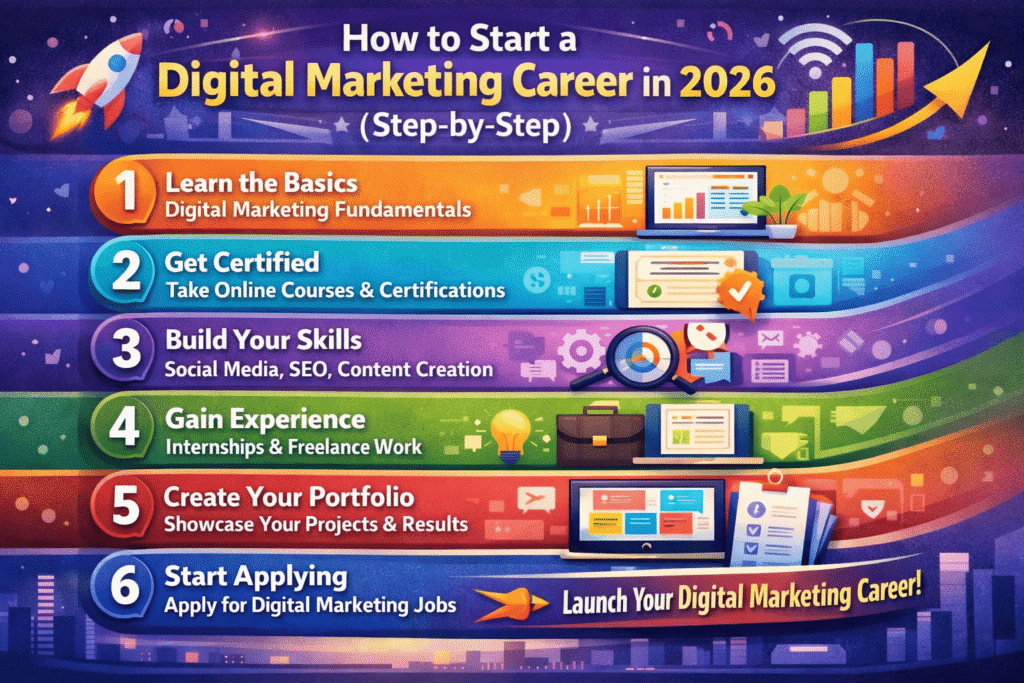
Step-by-Step Guide to Start a Digital Marketing Career
Step 1: Understand the Basics of Digital Marketing
Before entering the field, beginners should understand what digital marketing actually includes. It is a broad industry that covers various online marketing methods used to promote products and services.
Some of the main areas include:
- Search Engine Optimization (SEO)
- Social Media Marketing (SMM)
- Content Marketing
- Pay-Per-Click Advertising (PPC)
- Email Marketing
- Affiliate Marketing
Practical Tip:
Start by reading blogs, watching tutorials, and following marketing experts online to understand how digital campaigns work.
Step 2: Learn Core Digital Marketing Skills
After understanding the basics, the next step is learning essential digital marketing skills. These skills form the foundation of a successful career.
Key skills include:
- SEO: Optimizing websites to rank higher on search engines
- Content Marketing: Creating blogs, videos, and articles that attract audiences
- Social Media Marketing: Promoting brands through platforms like Instagram and LinkedIn
- PPC Advertising: Running paid ads to generate traffic and leads
- Analytics: Measuring marketing performance using data
Practical Tip:
Focus on learning one or two skills deeply first, such as SEO or social media marketing, before expanding to other areas.
Step 3: Take Online Courses or Certifications
Structured learning can help beginners understand the industry more clearly. Many online platforms offer certifications that teach the fundamentals of digital marketing.
These courses usually include:
- SEO fundamentals
- Google Ads training
- Social media marketing strategies
- Analytics and campaign optimization
Practical Tip:
Choose courses that include practical assignments so you can apply what you learn in real scenarios.
Step 4: Practice with Real Projects
Theory alone is not enough. Practical experience is one of the most important parts of learning how to start digital marketing.
Beginners can practise by:
- Creating a personal blog
- Managing a small business social media page
- Running a small advertising campaign
- Optimizing a website for SEO
Practical Tip:
Start a simple WordPress blog and apply SEO techniques to see how rankings improve over time.
Step 5: Build a Portfolio
A strong portfolio is essential for landing digital marketing jobs or freelance clients. It shows potential employers or clients what you can do.
Your portfolio may include:
- SEO projects
- Blog articles you have written
- Social media campaigns
- Advertising campaigns
- Website traffic results
Practical Tip:
Document your results. For example, show how a website’s traffic increased after applying SEO strategies.
Step 6: Create a Personal Brand
Personal branding is becoming increasingly important in digital marketing in 2026. Marketers who share their knowledge online often attract better opportunities.
Ways to build a personal brand include:
- Writing blog posts about marketing
- Sharing tips on social media
- Posting insights on professional platforms
- Networking with other marketers
Practical Tip:
Consistently post useful marketing insights on platforms like LinkedIn to establish credibility.
Step 7: Gain Experience Through Freelancing or Internships
Experience plays a major role when applying for digital marketing jobs. Beginners who lack experience can start with internships or freelance projects.
Possible options include:
- Freelancing platforms
- Internships with digital marketing agencies
- Helping local businesses with their online marketing
- Volunteer marketing work for small organizations
Practical Tip:
Even small projects can help build experience and confidence in your marketing skills.
Step 8: Learn Data and Analytics
Successful marketers rely heavily on data. Understanding analytics helps measure campaign performance and make better marketing decisions.
Marketers typically analyse the following:
- Website traffic
- Conversion rates
- Ad performance
- Audience behavior
Practical Tip:
Practise analysing campaign data regularly to improve your decision-making skills.
Step 9: Apply for Digital Marketing Jobs
Once you have developed core digital marketing skills, built a portfolio, and gained some experience, the next step is applying for jobs.
Common beginner roles include:
- SEO Executive
- Social Media Executive
- Content Marketer
- PPC Specialist
- Digital Marketing Executive
Practical Tip:
Customise your resume to highlight your marketing projects, skills, and certifications.
Digital Marketing Skills Needed in 2026
The digital marketing industry evolves quickly, so professionals must continuously update their skills. Some of the most valuable skills for digital marketing in 2026 include:
- Search Engine Optimization (SEO)
- Content Marketing
- Social Media Marketing
- Data Analytics
- Pay-Per-Click Advertising
- Marketing Automation
- Conversion Rate Optimization
- AI-driven marketing strategies
Learning these skills helps marketers remain competitive in the evolving digital landscape.
Tools Every Beginner Should Know
Digital marketers use various tools to manage campaigns, analyse data, and improve performance. Beginners should become familiar with common marketing tools such as:
- SEO research tools
- Website analytics platforms
- Social media scheduling tools
- Email marketing software
- Keyword research platforms
These tools help marketers optimise campaigns and improve their overall marketing efficiency.
Conclusion
Starting a digital marketing career in 2026 is more accessible than ever. With the growing demand for online marketing professionals, beginners have numerous opportunities to enter the field.
By understanding the basics, learning essential digital marketing skills, practising real projects, building a portfolio, and gaining practical experience, anyone can successfully learn how to start digital marketing. The journey requires patience and continuous learning, but the opportunities in this field make the effort worthwhile.
Whether someone chooses freelancing, agency work, or remote employment, the future of digital marketing jobs remains promising. The key is to start learning today, gain practical experience, and stay updated with industry trends.
Frequently Asked Questions (FAQ)
1. Is digital marketing a viable career in 2026?
Yes. Digital marketing continues to grow as businesses rely more on online platforms. This creates high demand for skilled marketing professionals.
2. What skills are required to start a digital marketing career?
Beginners should learn SEO, social media marketing, content marketing, advertising, and analytics to build strong digital marketing skills.
3. Can beginners start digital marketing without experience?
Yes. Beginners can start by learning online, practising personal projects, and gaining experience through internships or freelancing.
4. How long does it take to learn digital marketing?
It depends on the learning pace, but most beginners can understand the basics within a few months and build professional skills with consistent practice.